Supporting Mental Health Recovery in the Riverina

Strengthening the Recovery Pathway from Clinical Care to Community
Sunflower House provides community-based psychosocial support that strengthens long-term recovery for people living with mental illness across Wagga Wagga and the broader Riverina region.
Working alongside the Murrumbidgee Local Health District (MLHD) and the Murrumbidgee Primary Health Network (MPHN), Sunflower House supports individuals transitioning from clinical care as well as those living in the community who require ongoing psychosocial support.
Through structured programs, peer engagement, and a welcoming community environment, Sunflower House helps people rebuild confidence, regain purpose, and reconnect with life beyond the clinical setting.
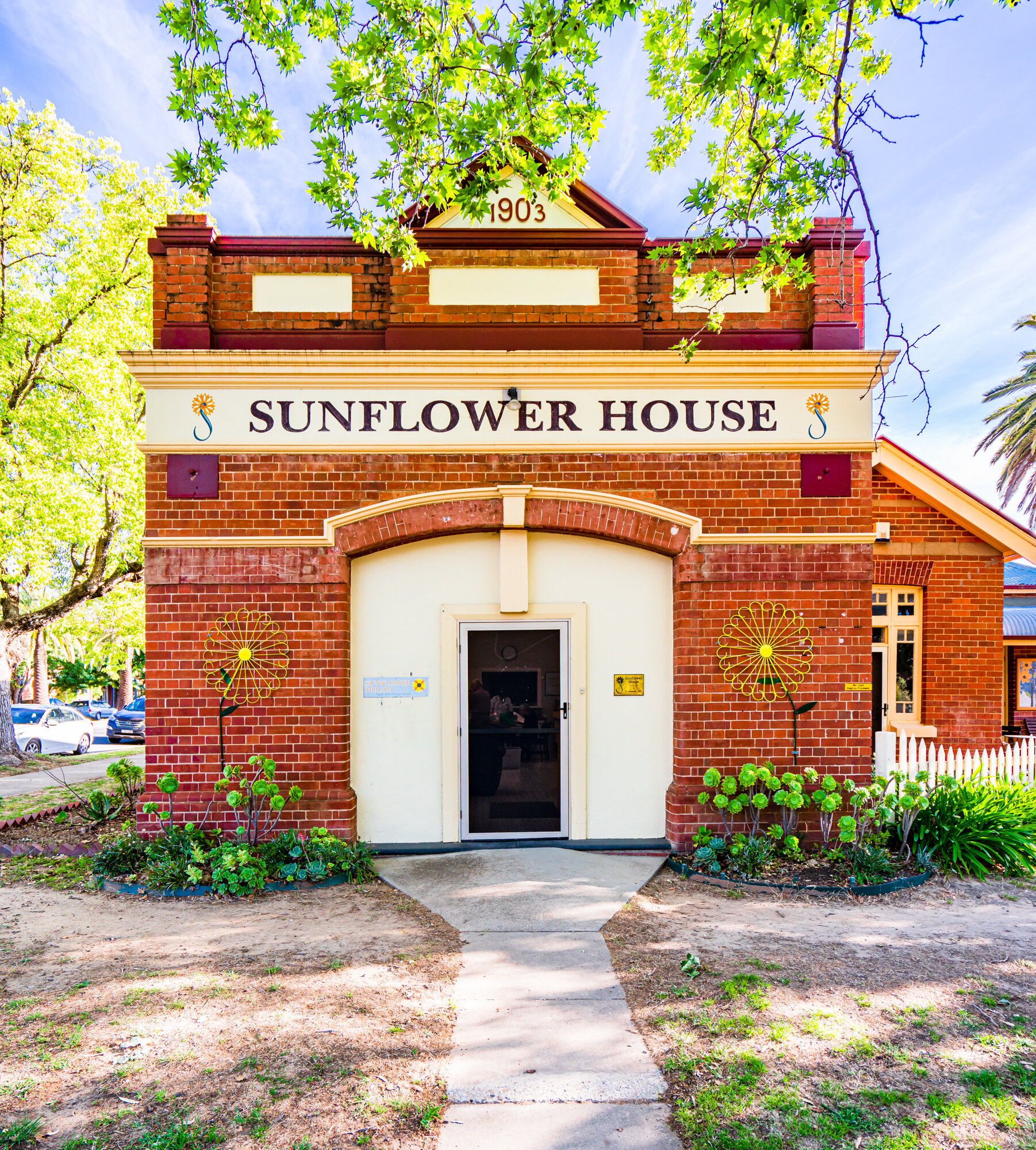
Sunflower House Impact
Only non-clinical, non-crisis Centre-Based Psychosocial Mental Health Service in the Riverina
Providing non-clinical, non-crisis recovery support in a safe and welcoming community environment.
Supporting the Mental Health Recovery Pathway
Working alongside clinical services to support individuals transitioning from hospital and community mental health care into sustained recovery.
Supporting the “Missing Middle”
Providing vital psychosocial support to people living with severe mental illness who are not eligible for the NDIS.
Peer-Led Recovery Workforce
Approximately 80% of our team are peer support workers with lived experience of mental health recovery.
Recovery in Action
Participants rebuilding their lives, with some returning as peer support workers supporting others.
Supporting the Future Mental Health Workforce
Certified student placement site for UNSW and TAFE NSW students studying mental health, medicine, paramedicine and related disciplines.
Message from the CEO
At Sunflower House, we believe that recovery from mental illness is not simply about treatment — it is about rebuilding lives.
Sunflower House was established to provide a safe, welcoming and empowering community environment for people living with mental health challenges across the Riverina. Every day we witness the strength and resilience of individuals working to regain stability, confidence and connection following periods of significant mental health difficulty.
Our role is simple but powerful: to ensure that people experiencing mental illness have a place where they feel accepted, supported and connected to community. Through structured psychosocial programs, peer engagement and collaboration with the broader mental health sector, Sunflower House provides an environment where individuals can rebuild confidence, rediscover purpose and take meaningful steps forward in their recovery.
A defining feature of Sunflower House is our peer-led approach to recovery. Approximately 80% of our team are peer support workers with lived experience of mental health challenges. Their insight, empathy and authenticity create an environment where participants feel understood and supported by people who genuinely appreciate the challenges of living with mental illness.

Importantly, many of our peer workers first came to Sunflower House as participants themselves. Through their recovery journeys they developed the confidence, stability and skills to return as members of our team, supporting others who are now walking a similar path. These experiences demonstrate the power of community-based recovery and provide visible proof that recovery is possible and lives can be rebuilt.
Sunflower House also contributes to the development of the future mental health workforce. We are proud to be a certified student placement site for the University of New South Wales (UNSW) and TAFE NSW, providing practical learning opportunities for students studying mental health, medicine, paramedicine and related disciplines.
Warm regards,
Mark J. Horton
Chief Executive Officer
Sunflower House Inc.

Supporting the Clinical Recovery Pathway
Sunflower House works closely with the Murrumbidgee Local Health District (MLHD) and the Murrumbidgee Primary Health Network (MPHN) as a strategic partner within the regional mental health recovery system.
Through this collaboration, Sunflower House contributes to an integrated recovery pathway connecting individuals transitioning from clinical care into long-term community-based psychosocial support.
Our engagement often begins before individuals leave hospital, working alongside the Acute Mental Health Unit, Wagga Wagga Community Mental Health services, and the Recovery Unit. By introducing people to Sunflower House while they are still receiving clinical care, we help ensure they have a safe and supportive place to continue their recovery once discharged.
This continuity of support is critical. When individuals leave hospital without strong community connections, the risk of isolation, relapse and re-admission can increase significantly.
Sunflower House helps reduce this risk by providing a structured environment where individuals can rebuild routine, reconnect with others and regain confidence in their ability to live independently within the community.
Through this work, Sunflower House strengthens recovery outcomes while also helping reduce avoidable pressure on hospital and acute mental health services.
Supporting the Non-NDIS Mental Health Community
Prior to the introduction of the National Disability Insurance Scheme (NDIS), many community-based mental health support programs existed to assist people living with long-term mental illness. These included initiatives such as Personal Helpers and Mentors (PHaMs), Partners in Recovery (PIR), Day to Day Living in the Community (D2DL) and other psychosocial support services.
When the NDIS was implemented, many of these programs were withdrawn or transitioned into the new system.
Today, approximately nine out of ten people living with mental health challenges do not meet the eligibility criteria for NDIS support, leaving a significant gap in ongoing community-based care.
Many of these individuals live with conditions such as anxiety, depression, social isolation, paranoia and other debilitating mental health challenges. Without appropriate support, they can become increasingly disconnected from community life and at greater risk of crisis.
Sunflower House provides a welcoming centre-based environment where these vulnerable community members can reconnect, build supportive relationships and regain confidence.
Through structured psychosocial programs, peer engagement and meaningful social participation, individuals develop coping skills, strengthen wellbeing and re-engage with their community.
In this way, Sunflower House supports the “missing middle” of mental health care — individuals who require ongoing psychosocial support but fall outside existing funding systems.
Rebuilding Lives and Strengthening Communities
Recovery is about more than support — it is about restoring independence, confidence and opportunity.
At Sunflower House we see firsthand how the right environment and support can help people rebuild their lives. For some individuals this means reconnecting with family and community. For others it means developing new skills, volunteering or taking steps toward education and employment.
We have seen participants who once came to Sunflower House seeking support later return as peer support workers, helping others along their recovery journeys.
By helping individuals stabilise their mental health and reconnect with community life, Sunflower House contributes to stronger communities and improved long-term mental health outcomes.
Importantly, this work also benefits the broader health system and community by reducing avoidable hospital presentations while supporting people to live productive and meaningful lives within the community.
A Community of Hope and Recovery
Recovery is rarely a straight path. It is built through small steps, supportive relationships and opportunities to reconnect with life and community.
Every day we witness the difference that compassion, structure and belonging can make in someone’s recovery journey.
It is a privilege for our team, volunteers, peer workers and partners to walk alongside the people who attend Sunflower House as they take those steps toward a healthier and more connected future.